PCS PPM (DITY) Move Calculator and Entitlements
Weight allowance, the government constructed cost, expenses and tax withholding in one waterfall.
Reviewed against official sources
| GCC payment (Estimated) | $7,000.00 |
| Moving costs | −$1,500.00 |
| Taxable profit | $5,500.00 |
| Federal withholding 22% | −$1,210.00 |
| Net in pocket | $4,290.00 |
| Plus DLA (tax-free) | $3,548.02 |
| Grade | With deps | Without |
|---|---|---|
| O-10 to O-6 | 18,000 lb | 18,000 lb |
| O-5/W-5 | 17,500 lb | 16,000 lb |
| O-4/W-4 | 17,000 lb | 14,000 lb |
| O-3/W-3 | 14,500 lb | 13,000 lb |
| O-2/W-2 | 13,500 lb | 12,500 lb |
| O-1/W-1 | 12,000 lb | 10,000 lb |
| E-9 | 15,000 lb | 13,000 lb |
| E-8 | 14,000 lb | 12,000 lb |
| E-7 | 13,000 lb | 11,000 lb |
| E-6 | 11,000 lb | 8,000 lb |
| E-5 | 9,000 lb | 7,000 lb |
| E-4 | 8,000 lb | 7,000 lb |
| E-1 to E-3 | 8,000 lb | 5,000 lb |
Illustrative GCC: the final Government Constructed Cost is computed by DPS/move.mil from the actual net weight and route. The GCC rate here is an Estimated placeholder.
How a PPM Pays You for a Permanent Change of Station Move
A Personally Procured Move (PPM), still called a DITY move, pays you to move your own household goods. The incentive is 100% of the government constructed cost (GCC), what it would have cost the government to move the same net weight, capped at your weight allowance.
From May 15 to September 30, 2025 the rate was temporarily 130% of the GCC. That window has closed; 2026 moves are paid at 100% under the current Tender of Service.
Your allowance depends on grade and dependents. An E-5 with dependents may move 9,000 lb, an E-6 11,000 lb, an E-7 13,000 lb and an O-3 14,500 lb. Separately, Dislocation Allowance (DLA) helps with moving costs: $3,548.02 for an E-5 or E-6 with dependents in 2026.
PCS Entitlements Beyond the PPM: DLA, MALT and Per Diem
A permanent change of station (PCS) move comes with several entitlements, and the PPM incentive is only one of them. Dislocation Allowance (DLA) is a flat payment toward the costs of setting up a new household: in 2026, $3,548.02 for an E-5 or E-6 with dependents and $2,389.42 without, and $4,041.88 for an O-3 with dependents.
When you drive to the new duty station, Monetary Allowance in Lieu of Transportation (MALT) pays a set rate per authorized mile, and per diem covers lodging and meals and incidental expenses for each authorized travel day. PCS travel per diem is a flat daily rate based on the standard CONUS rate, not the rate of the cities you pass through. Authorized travel time is generally one day for every 350 miles. Dependents 12 and older receive 75% of the member’s per diem rate and younger children 50%.
MALT and per diem are paid on your travel claim, separate from the PPM incentive, so a member who moves their own goods and drives the family car collects both.
CONUS vs. OCONUS Moves and Your Transportation Office
Most PPMs are moves within the continental United States (CONUS), where you can rent a truck or trailer and drive the goods yourself. Overseas (OCONUS) moves usually rely on a government shipment, and a PPM there has extra conditions, so get counseling before you plan one.
Your installation transportation office, also called the personal property office, is where service members get PPM counseling, approval and closeout help. Request the PPM in the move system before you load anything: moving without approval can reduce or delay the payment. Ask the office where the nearest certified scales are and what documents your closeout will need.
Financial Planning for Military Members Doing a PPM
A PPM costs money before it pays. Truck rental, fuel, packing supplies and lodging all come out of your pocket first, and the incentive arrives only after the closeout is processed. Military members can request advance pay of up to three months of basic pay, repaid through pay deductions, usually over 12 months, and may be able to get an advance on the PPM incentive.
Keep every receipt. Documented operating expenses lower the taxable part of the incentive, and active-duty members moving on PCS orders can still deduct unreimbursed qualified moving expenses on IRS Form 3903. Free financial resources include the personal financial counselors at your installation’s financial readiness office and Military OneSource.
PPM Payout Example: E-6 with Family Moving 9,400 lb
E-6 with dependents, allowance 11,000 lb. Certified weight tickets: full 24,600 lb, empty 15,200 lb. GCC estimate from the move system: $7,850. Receipts: truck rental $1,900, fuel $620.
- Net weight: 24,600 − 15,200 = 9,400 lb, under the 11,000 lb allowance.
- Incentive: 100% of the GCC for 9,400 lb = $7,850.
- Operating expenses with receipts: $1,900 + $620 = $2,520.
- Taxable portion: $7,850 − $2,520 = $5,330.
- Federal supplemental withholding at 22%: $1,172.60.
- Payout: $7,850 − $1,172.60 = $6,677.40, plus DLA of $3,548.02 paid separately.
About $4,157 left after paying the truck and fuel, before state tax. The GCC figure is an example; your move system calculates the real one.
PPM Edge Cases: Overweight, Pro-Gear and Lost Weight Tickets
What if I move more than my allowance?
E-6 with family moves 12,000 lb net.
Result: The GCC is computed on 11,000 lb, the allowance. The extra 1,000 lb earns nothing.
What if I carry professional gear?
Member has 1,200 lb of pro-gear; spouse has 300 lb.
Result: Pro-gear is weighed and declared separately and does not count against the household goods allowance, up to 2,000 lb for the member and 500 lb for the spouse.
What if I lose my empty weight ticket?
Only the full ticket survives.
Result: Net weight needs both empty and full certified tickets. Without them the move office may use a constructed weight, which is usually lower.
What if I do a partial PPM?
Movers take the house; you drive one trailer.
Result: The PPM incentive covers only the weight you move yourself. The rest moves on the government shipment, and both count against the same allowance.
PCS Weight Allowance by Grade (JTR Table 5-37)
| Grade | With dependents | Without dependents |
|---|---|---|
| E-1 to E-3 | 8,000 | 5,000 |
| E-4 | 8,000 | 7,000 |
| E-5 | 9,000 | 7,000 |
| E-6 | 11,000 | 8,000 |
| E-7 | 13,000 | 11,000 |
| E-8 | 14,000 | 12,000 |
| E-9 | 15,000 | 13,000 |
| O-1/W-1 | 12,000 | 10,000 |
| O-2/W-2 | 13,500 | 12,500 |
| O-3/W-3 | 14,500 | 13,000 |
| O-4/W-4 | 17,000 | 14,000 |
| O-5/W-5 | 17,500 | 16,000 |
| O-6 to O-10 | 18,000 | 18,000 |
PCS PPM Move FAQ
How much do you get paid for a PPM move in 2026?
100% of the government constructed cost for the net weight you move, up to your allowance. The payment is taxable income, minus documented operating expenses.
Is the PPM still 130%?
No. The 130% rate applied only from May 15 to September 30, 2025. Moves in 2026 are paid at 100% of the GCC.
How do I do a PPM move?
Request the PPM in the move system, get the counseling estimate, weigh the empty and loaded vehicle at a certified scale, keep fuel and rental receipts, and file the closeout with your weight tickets after the move.
Do I get MALT and per diem on a PPM move?
Yes, for your authorized PCS travel. MALT pays a set rate per mile and per diem pays a flat daily rate for each authorized travel day. Both are claimed on the travel voucher, separately from the PPM incentive.
What is DLA for an E-5 in 2026?
$3,548.02 with dependents and $2,389.42 without, effective January 1, 2026.
Related tools
Official sources
- Joint Travel Regulations, changes (PPM Tender of Service)Defense Travel Management Office
- Personally Procured MovesDoD Personal Property Activity
- Authorized Weight Allowance (JTR Table 5-37)NAVSUP Household Goods
- Dislocation Allowance rates, Jan 1, 2026Defense Travel Management Office
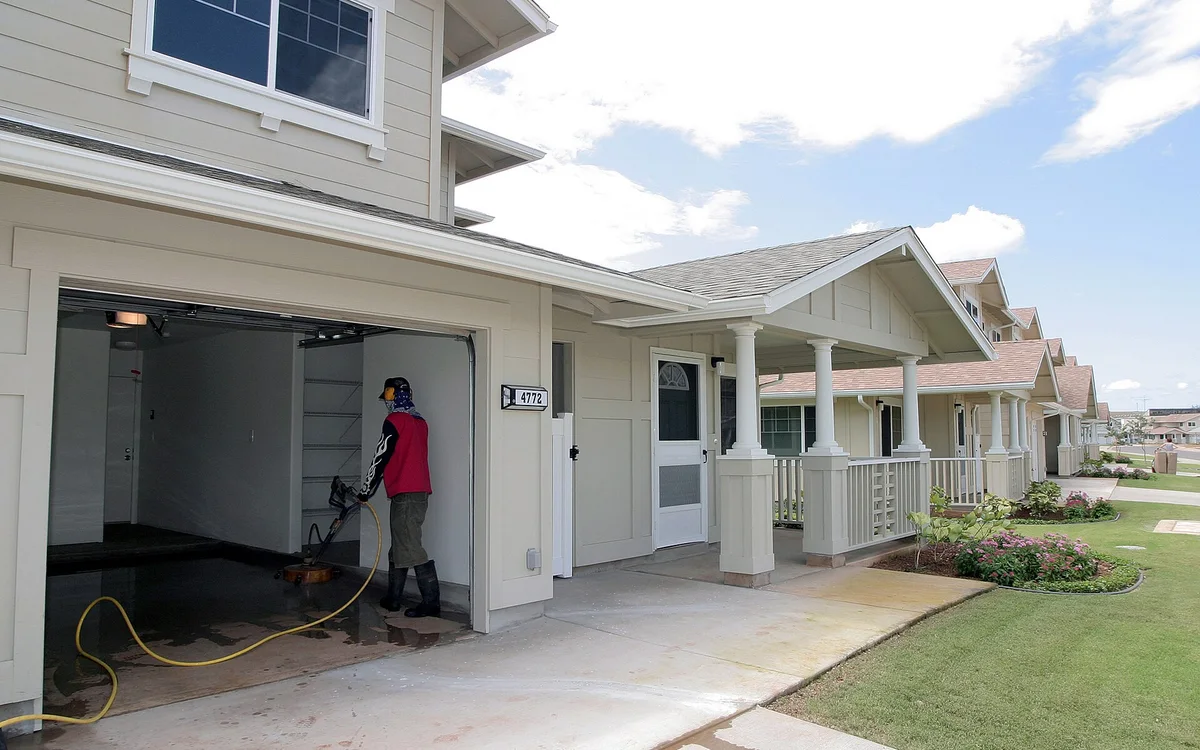
* Photo: U.S. Navy photo, Public Domain